

Rubén López
Software developer
Telecommunications expert with a passion for tech. Film buff and mountain biking enthusiast.

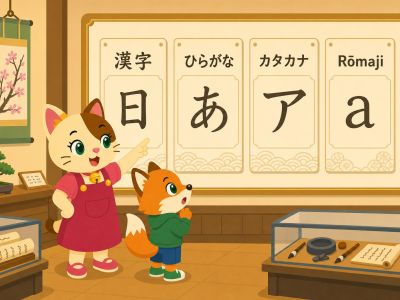
Kanji is the primary form of notation, but particles, auxiliary verbs, verb endings, and some adverbs are written in hiragana.

The Japanese writing system is based on a combination of Chinese characters (kanji) and two syllabaries: hiragana and katakana.

Japanese has five vowels: /a/, /i/, /u/, /e/, and /o/, which are the most basic sounds. The consonant phonemes include /p/, /b/, /d/, /k/, /g/, /t/, /m/, /n/, /r/, /s/, /z/, /h/, /j/, and /w/.

If you're having trouble upgrading to the PRO plan in the app, check this guide depending on your situation.

Some Khanji School apps, like Chinesimple, use your Android device’s Text-To-Speech (TTS) system to play certain audio clips.

If you're using an Android device and can't use voice recognition, it's likely that your device is missing some essential Google services.

Discover how to redeem your promotional code and unlock all PRO features of Chinesimple HSK in just a few steps.

Learn how compound verbs work in Chinese and their meanings.

Learn how adjectives are used in Chinese and their basic rules.

Learn how to express ongoing actions in Chinese using particles like 正在 and 在.

Learn how Chinese verbs express past and future without conjugations.

Discover how Chinese nouns convey gender and number through context.

Discover how Chinese words change functions based on context.

Learn how Chinese words are formed and the logic behind their meanings.

Unlike languages that use alphabets, Chinese is not written letter by letter: each character typically represents a syllable and carries a unit of meaning.

Discover the keys to correctly translating from or to Chinese, avoiding literal translations and understanding the context behind each word.

HSK6 now available. Access complete resources such as vocabulary, grammar, Hanzi writing, exams, and much more. Improve your Chinese effectively with the best app for studying HSK.

Discover how to effectively use the Chinesimple app from day one with our step-by-step guide for beginners.

Learn how to easily redeem discount codes in Chinesimple.

Explore the history, grammar, and alphabet of Japanese in our introductory guide. Perfect for students and Japanese language enthusiasts

Discover why Japanese uses Chinese characters, their history, and their impact on Japanese writing and culture.
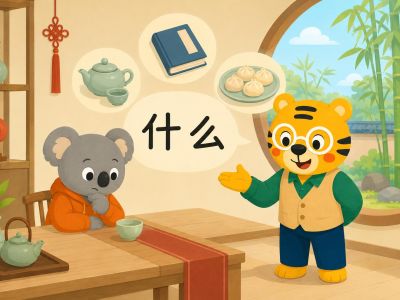
Learn the main uses of 什么, one of the most important Chinese question words.


The creation of simplified characters was carried out as an attempt by the government to increase literacy in China and make the writing of Chinese easier to learn.

In the Chinese language, it is common to find characters with more than one pronunciation.

In Mandarin Chinese, many characters sound alike, or very similar, but they have different meanings and different spellings. These characters are known as "homophones".

Remember that searching by meaning in a paper Chinese dictionary may require some exploration and patience, as words can be classified in different ways.

We are pleased to provide you with the complete HSK 1 v3.0 (2021) word list, available for convenient download in PDF format.

Knowing the fundamental strokes will help you to search for a word in the dictionary more efficiently.

Searching in a paper dictionary can be time-consuming and it requires patience. Make sure you have a paper Chinese dictionary that includes Pinyin.

Looking up words in a paper dictionary can be time-consuming. That's why we recommend using the dictionary in our Chinesimple App, which offers faster and simpler searches.

Introducing the "exam" feature in the Chinesimple app marks a significant milestone for those who want to learn Chinese effectively and dynamically.

Chinese radicals, called 部首 [bùshǒu], are components that can give you clues about a character’s meaning.

App-based dictionaries like Chinesimple offer several advantages over traditional paper dictionaries when it comes to looking up words in Mandarin Chinese.

Searching for a word in a Chinese paper dictionary can be challenging due to the nature of Chinese characters, but it's not impossible.

Mahjong is played with four players and a set of 144 tiles. The tiles are used to form combinations and earn points.

When to write ü, what apostrophes do, and where tone marks go.

"Erhua" 儿化/兒化 (érhuà) refers to the fact of adding a final “-r" sound to a syllable. It is prevalent in the Beijing dialect but it is also a Standard Chinese feature.

Chinese does not have an alphabet like English or Spanish. Instead, it is written with characters called hànzì (汉字).

Chinese Classifiers are "special characters" used along with numbers to define the quantity or with demonstratives to identify the object.

The writing does tell us that the Chinese characters appeared more than three thousand years ago from a combination of abstract signs.
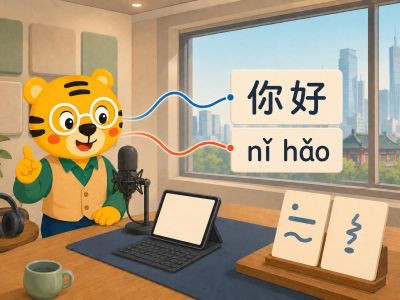
Pinyin is the official romanization system for Standard Mandarin Chinese. It uses the Latin alphabet to represent the pronunciation of Chinese characters.

The new HSK standards divide Chinese proficiency into 9 levels, which are themselves divided into 3 stages.

HSK is the standardized expertise test for language proficiency in Mandarin in the People's Republic of China for non-native speakers.

First-rate all-in-one Mobile Apps for learning Chinese, Japanese and Korean. Discover the perfect study partner which provides high value solutions. Be always up-to-date and pass your official test