A mora is a unit used to measure the rhythm of words. In Japanese, it is known as 拍【はく, haku】. Each mora lasts roughly the same amount of time, like a short, rhythmic beat. It is similar to a syllable, 音節【おんせつ, onsetsu】, but one syllable doesn't always equal one mora. Here are five important rules to help you count morae in Japanese.
How do you count morae in Japanese?
1. A full-size kana counts as one mora:
| Japanese / Rōmaji / Meaning |
|---|
| さくら 【sakura】 cherry tree さ【sa】・く【ku】・ら【ra】 → 3 morae |
2. The small っ【tsu】counts as one mora:
| Japanese / Rōmaji / Meaning |
|---|
| ざっし 【zasshi】 magazine ざ【za】・っ・し【shi】 → 3 morae |
The っ is one mora long. In ざっし, you hold the following consonant for longer.
3. Combinations with a small ゃ【ya】, ゅ【yu】or ょ【yo】only count as one mora:
| Japanese / Rōmaji / Meaning |
|---|
| ひゃく 【hyaku】 one hundred ひゃ【hya】・く【ku】 → 2 morae |
4. A long vowel adds a mora:
| Japanese / Rōmaji / Meaning |
|---|
| おかあさん 【okāsan】 mother お【o】・か【ka】・あ【a】・さ【sa】・ん【n】 → 5 morae |
Note: In the romanized form "okāsan," the mark above the a indicates a long vowel.
5. The ん【n】sound also counts as one mora:
| Japanese / Rōmaji / Meaning |
|---|
| げんき 【genki】 energetic げ【ge】・ん【n】・き【ki】 → 3 morae |
Why are morae useful in Japanese?
Morae help you understand the rhythm of Japanese and learn to pronounce it correctly. Understanding morae can help in three ways.
1. Pronouncing Japanese correctly
Counting morae helps you distinguish between sounds that, at first, seem very similar, especially when a word has long vowels or a small っ【tsu】.
2. Understanding Japanese haiku
Traditional Japanese haiku usually follow a pattern of 5-7-5 morae, rather than syllables.
3. Studying Japanese phonology
Phonology explores how the sounds of a language are organized and how they work.
Morae are one of the units used to analyze Japanese rhythm, vowel length, and other aspects of pronunciation.
Don't worry though, you don't need to have an in-depth understanding of phonology or consciously count morae every time you speak. What matters is that you practice different sound lengths, especially with long vowels, the small っ【tsu】, and ん【n】. Understanding these concepts can help you make sense of what you're hearing.
For example:
| Japanese / Rōmaji / Meaning |
|---|
| おばさん 【obasan】 aunt |
| おばあさん 【obāsan】 grandmother |
The difference here is in the vowel length: in the second word, the "a" is long. That difference in duration is what changes the meaning.
At Khanji School, we prioritize spoken Japanese and the ability to communicate naturally. Theory can be useful when it helps you better understand Japanese, but the goal is to use the language in real-life situations.
Frequently asked questions about morae in Japanese
What is the difference between a mora and a syllable?
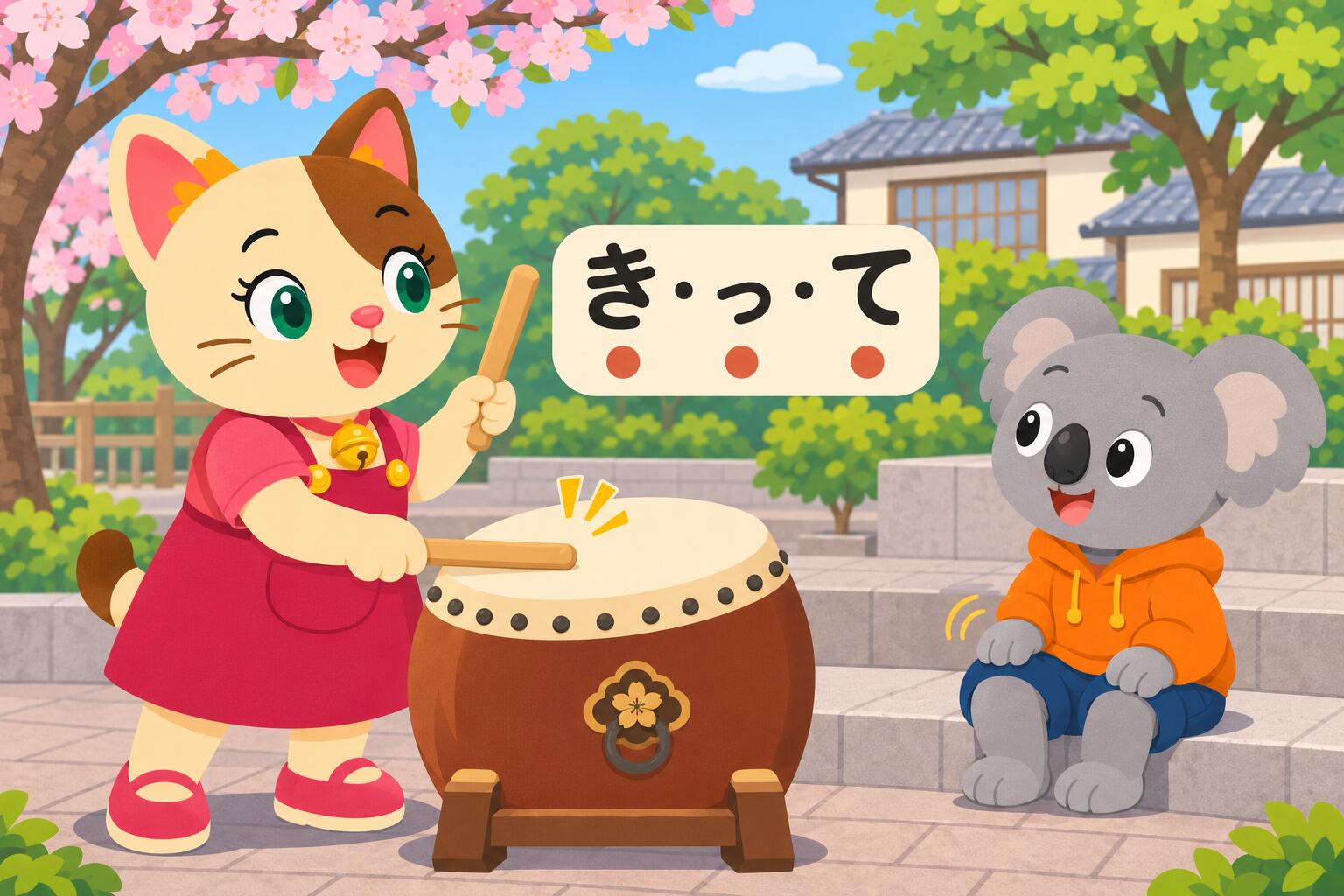
A mora is a unit of rhythm or timing; a syllable is another way of organizing sounds. In Japanese, the two are not always equal. For example, きって【kitte】has three morae (き・っ・て) but two syllables.
Do you need to be able to count morae to speak Japanese?
No. You can learn to speak Japanese without knowing what a mora is or understanding phonology. What matters is learning to hear and accurately reproduce differences in sound length, whether you understand the theory behind it or not.
Is it important to distinguish between short and long vowels?
Yes, because the length of a vowel can change a word's meaning entirely. For example, the only difference between おばさん【obasan】("aunt") and おばあさん【obāsan】("grandmother") is the length of the "a" sound.
|
Free download
If you've made it this far, you're serious. Turn that momentum into real progress with Chinesimple and make every study session count.
Native audio
Games
Flashcards
Exams
Pronunciation


|
|