Do you know the difference between a haiku and a senryū? Both are short Japanese poems whose structure can be very similar, but they tend to explore very different themes. Haiku usually focuses on nature and the seasons, while senryū explores people, their emotions, and everyday situations.
What is a haiku?
俳句【はいく, haiku】
A haiku is a short Japanese poem that traditionally follows a 5-7-5 pattern. It usually focuses on nature, the seasons, or a fleeting moment, capturing it in just a few words.
My mother belongs to a haiku club in Japan. Here's one of their poems:
| Japanese / rōmaji / meaning |
|---|
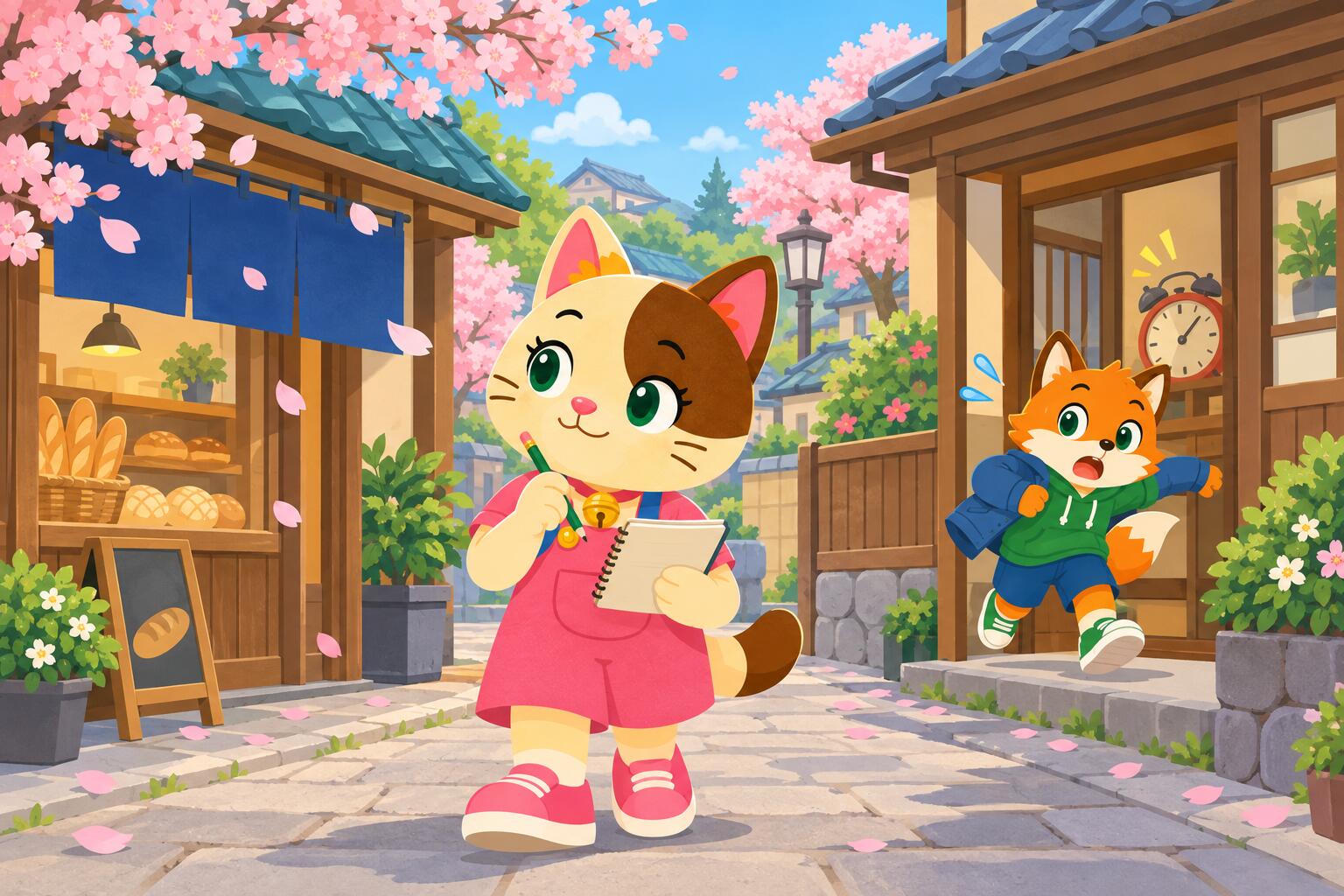
| 開店の パン屋ののぼり 桜舞う 【Kaiten no / panya no nobori / sakura mau】 A new bakery; cherry blossoms shower down, flutter on the sign |
Haiku aim to convey a feeling or an image without fully explaining it. That often makes them very visual: when we read these poems, we can picture the scene.
What is a senryū?
川柳【せんりゅう, senryū】
Like haiku, a senryū is a short poem that also traditionally follows a 5-7-5 pattern. The main difference is the subject matter – while haiku often focus on nature, senryū focus on people, their emotions, flaws, relationships, and everyday situations. Senryū also often have a humorous, ironic, or satirical tone.
For example:
| Japanese / rōmaji / meaning |
|---|
| 今日もまた 目覚まし止めて 遅刻する 【Kyō mo mata / mezamashi tomete / chikoku suru】 Once again today, I turn off my alarm clock and now I am late. |
Sound familiar? Although the 5-7-5 pattern is traditional, senryū has fewer formal rules, so it can be easier to write one without knowing that much about Japanese poetry.
How are haiku, senryū, and waka related?
和歌【わか, waka】
To understand these forms of Japanese poetry better, we need to talk about waka. Waka is a traditional form of Japanese poetry with a long history. Its best-known form, tanka (短歌【たんか, tanka】), has 31 rhythmic units and follows a 5-7-5-7-7 pattern. Waka can express feelings and explore nature, the seasons, love, and different aspects of life. Over time, this tradition gave rise to other poetic forms, including haiku and senryū.
Of course, Japanese poetry has far more nuances and rules than we can cover in a single article. This comparison simply gives us a starting point for telling haiku and senryū apart.
At Khanji School, we learn about Japanese culture alongside the language, because learning a language also means getting to know how its speakers think, express themselves, and live.
Frequently asked questions about haiku, senryū, and waka
What is the difference between haiku and senryū?
Here's a simple summary:
- Haiku: focuses mainly on nature, the seasons, and fleeting moments.
- Senryū: focuses mainly on people and everyday life.
Both are types of short poems traditionally associated with the 5-7-5 pattern.
What is waka?
Waka is a traditional form of Japanese poetry dating back to ancient times. The term literally means "Japanese poem." Its best-known form is tanka (短歌【たんか, tanka】), which has 31 rhythmic units arranged in a 5-7-5-7-7 pattern.
Traditionally, waka explores themes such as love, nature, the seasons, beauty, and feelings.
Can I write a haiku or a senryū in English?
Yes. You can take inspiration from these poetic forms and write them in English. However, if you want to follow the rules of traditional Japanese poetry exactly, you need to account for the differences between Japanese and English poetic meter.
|
Free download
If you've made it this far, you're serious. Turn that momentum into real progress with Chinesimple and make every study session count.
Native audio
Games
Flashcards
Exams
Pronunciation


|
|