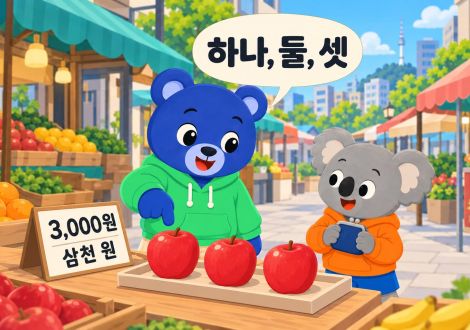
In Korean, native Korean numbers are used to count people, animals, objects, and many other things. But did you know that simply saying how many "things" there are doesn't quite cut it?
What are counters?
In Korean, in addition to a number, we also need a word that tells us what we're counting. These words are known as counters or numeral classifiers.
In English, we use expressions like "two glasses of water" or "three sheets of paper." Korean works in a similar way, but there are many more counters, and which one we use is based on what we want to count.
That's why it's important to familiarise yourself with the most common counters as you learn Korean numbers.
Which counters are used most often?
Here are some of the counters you'll come across most often in everyday life.
- 개 (gae): objects in general – one of the most common counters
- 명 (myeong): people (informal)
- 분 (bun): people (formal).
- 살 (sal): age
- 권 (gwon): books
- 마리 (mari): animals and insects
- 병 (byeong): bottles
- 잔 (jan): drinks served in glasses or cups
- 컵 (keop): quantities measured in glasses or cups
- 대 (dae): machines, electronic devices, and vehicles
- 벌 (beol): items or sets of clothing
How do we count people respectfully?
To count people, we can use 명 or 분. The difference is that 분 is the honorific form, which we use to show respect for the people we're counting.
For example:
| Korean / meaning |
|---|
| 친구 열 명 Ten friends (informal) |
| 선생님 열 분 Ten teachers (formal) |
What's the difference between 잔 and 컵?
Some counters can seem similar, such as 잔 and 컵, which are used when talking about drinks.
In general, 잔 is used to count servings of drinks such as coffee, tea, or alcoholic drinks. For example:
| Korean / meaning |
|---|
| 커피 한 잔 A cup of coffee |
| 녹차 한 잔 A cup of green tea |
| 와인 한 잔 A glass of wine |
By contrast, 컵 refers to a quantity measured in a glass or cup, as in 물 한 컵 (a glass of water).
Although the type of container can also dictate which counter we use, it's useful to remember that 잔 is commonly used to count drinks such as coffee, tea, and wine.
What other counters can we use?
There are many more counters in Korean, but you don't need to learn them all at once. Here are a few more you're likely to come across in everyday life.
- 장 (jang): sheets of paper, tickets, photos, and other flat objects
- 켤레 (kyeolle): pairs of items such as shoes or socks
- 쌍 (ssang): pairs or couples
- 채 (chae): houses and buildings
- 그루 (geuru): trees
- 송이 (songi): flowers and some fruits that grow in clusters
- 봉지 (bongji): products in bags
- 끼 (kki): daily meals
- 번 (beon): the number of times something happens
What order do the noun, number, and counter go in?
The order is noun + number + counter. First, we say what we're counting, then how many there are, and finally the corresponding counter.
For example, for "five apples," we use 사과 (sagwa, apple), 다섯 (daseot, five), and 개 (gae, a counter for objects in general).
사과 + 다섯 + 개
→ 사과 다섯 개
Watch out! Some numbers change form
When we use native Korean numbers before a counter, there's one important detail you need to be aware of: 하나, 둘, 셋, 넷, and 스물 change form.
| Number | Original form | Form before a counter |
|---|---|---|
| 1 | 하나 (hana) | 한 (han) |
| 2 | 둘 (dul) | 두 (du) |
| 3 | 셋 (set) | 세 (se) |
| 4 | 넷 (net) | 네 (ne) |
| 20 | 스물 (seumul) | 스무 (seumu) |
For example, to say "one apple," we don't say 사과 하나 개, but 사과 한 개. That's because 하나 changes to 한 before a counter.
More examples:
| Korean / meaning |
|---|
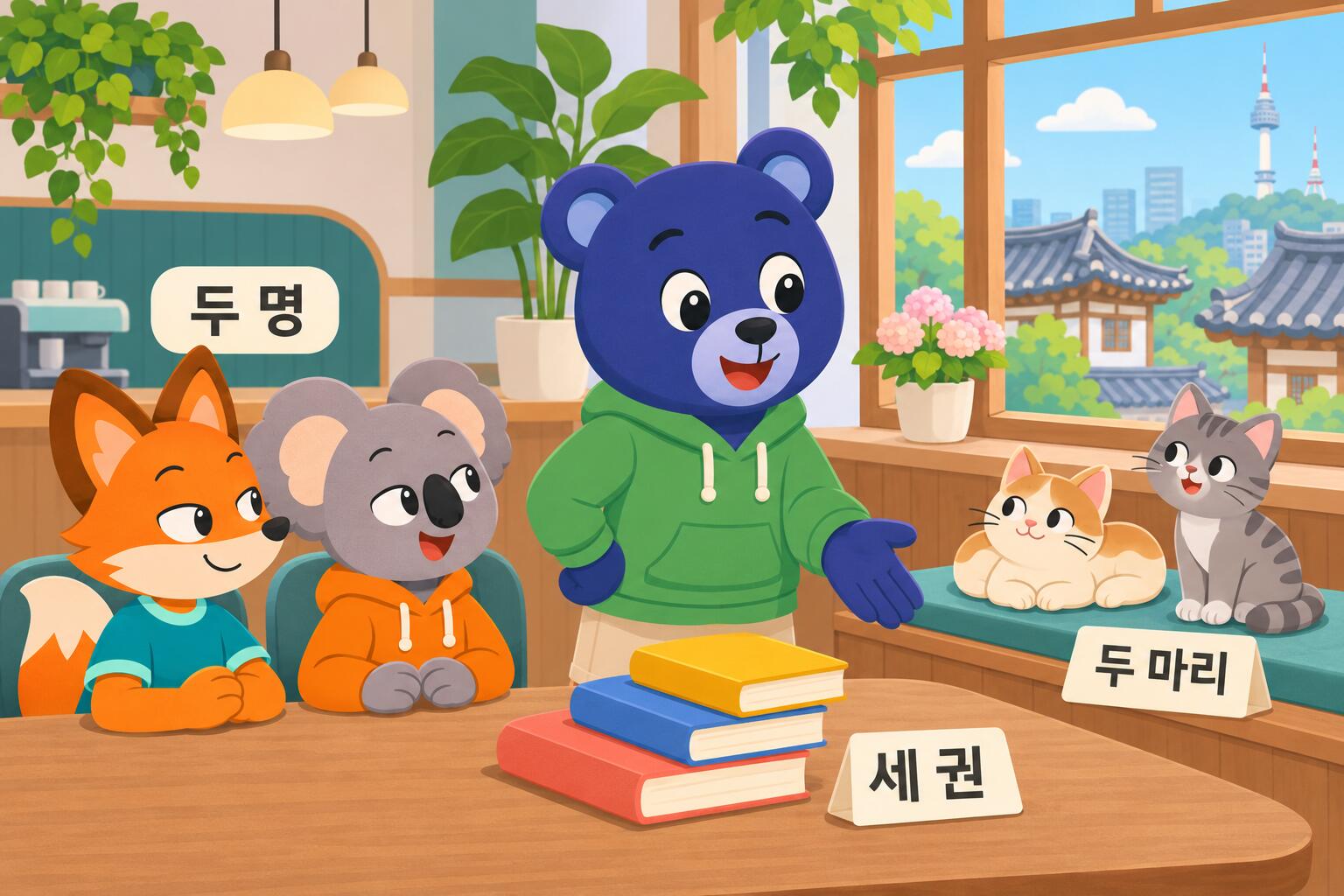
| 고양이 두 마리 Two cats |
| 책 세 권 Three books |
| 학생 네 명 Four students |
| 고양이 스무 마리 Twenty cats |
Frequently asked questions about Korean counters
Do you always need a counter when counting in Korean?
A counter is usually used to count people, animals, and objects. Which counter you use depends on what you want to count.
What order do the noun, number, and counter go in?
The order is: noun + number + counter.
What's the difference between 잔 and 컵?
잔 is commonly used to count servings of drinks such as coffee, tea, and wine. By contrast, 컵 indicates a quantity measured in a cup or glass.
|
Free download
If you've made it this far, you're serious. Turn that momentum into real progress with Chinesimple and make every study session count.
Native audio
Games
Flashcards
Exams
Pronunciation


|
|