The short answer is yes – basic Japanese verb conjugation is much simpler than it looks at first glance. That’s because in the polite -ます (masu) form, the verb doesn’t change according to person, the present and future share the same form, and there are just four basic forms to express present/future affirmative, present/future negative, past affirmative and past negative tenses.
What makes basic Japanese conjugation so simple?
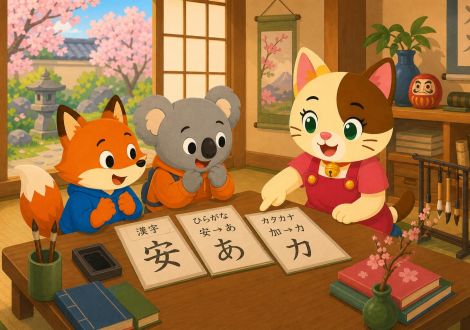
One of the first big steps you take when studying Japanese is learning hiragana and katakana. However, by the time you reach basic verb conjugation, especially the polite -ます (masu) form, the structure is quite regular.
Unlike in many languages, the subject does not affect the verb form in Japanese. In other words, it doesn’t matter whether you’re referring to “I”, “you”, “he”, “she”, “we” or “they”, the verb form stays the same.
The subject does not change the verb form
In Japanese, conjugation does not change according to the person you are referring to. That means the same verb form can work for different subjects, and context tells you who is completing the action.
For example, 食べます (tabemasu) can mean “I eat”, “you eat”, “he/she eats”, “we eat” or “they eat”, depending on the context.
Present and future use the same form in Japanese
Another advantage for beginners is that the present and future tenses use the same verb form. You can understand whether the present or future is being used from context, references to time, or the overall situation.
The basic polite form can also be used to express affirmative past and negative past using a very recognizable pattern.
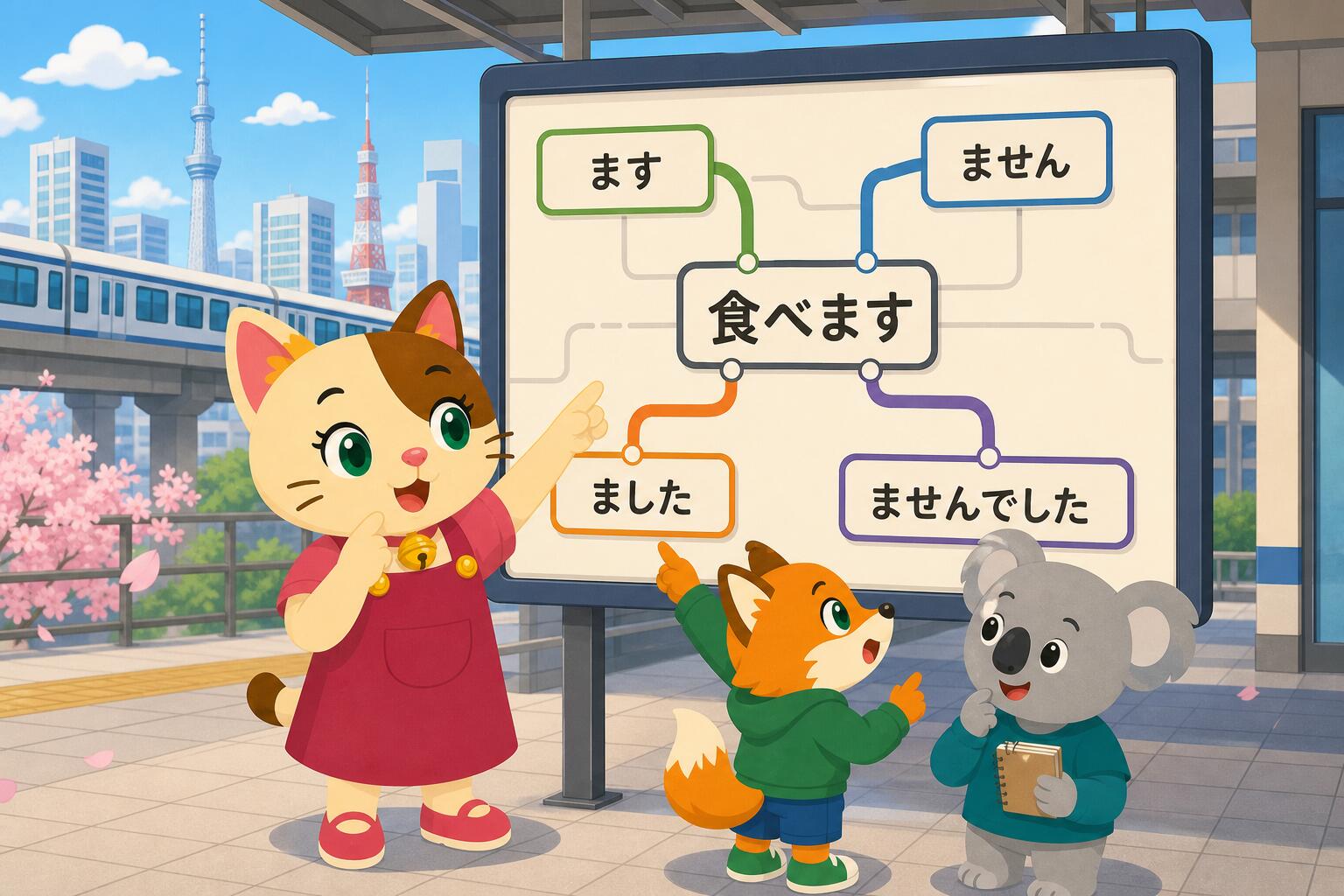
Four basic forms of polite -ます (masu) conjugation
Using just four basic formal or polite forms, you can express present/future affirmative and negative, as well as past affirmative and negative.
| form | ending | use |
|---|---|---|
| Present and future affirmative | -ます (-masu) | To affirm an action in the present or future |
| Present and future negative | -ません (-masen) | To negate an action in the present or future |
| Past affirmative | -ました (-mashita) | To affirm an action in the past |
| Past negative | -ませんでした (-masen deshita) | To negate an action in the past |
Example using the verb “to eat”: 食べる (taberu)
The dictionary form of “to eat” is 食べる (taberu). In its polite form, this becomes 食べます (tabemasu).
| Japanese | romaji | meaning |
|---|---|---|
| 食べます | tabemasu | I eat / I will eat |
| 食べません | tabemasen | I do not eat / I will not eat |
| 食べました | tabemashita | I ate / I have eaten |
| 食べませんでした | tabemasen deshita | I did not eat / I have not eaten |
Example using the verb “to study”: 勉強する (benkyō suru)
The dictionary form of “to study” is 勉強する (benkyō suru). In its polite form, this becomes 勉強します (benkyōshimasu).
| Japanese | romaji | meaning |
|---|---|---|
| 勉強します | benkyōshimasu | I study / I will study |
| 勉強しません | benkyōshimasen | I do not study / I will not study |
| 勉強しました | benkyōshimashita | I studied / I have studied |
| 勉強しませんでした | benkyōshimasen deshita | I did not study / I have not studied |
How to say “let’s study” in Japanese
Simply switching -ます (-masu) to -ましょう (-mashō) changes the meaning to “let’s…” or “shall we…?” – a really useful way to suggest an action.
For example, 勉強しましょう (benkyōshimashō) means “let’s study”.
So, if you want to learn more Japanese step by step with Khanji School… 勉強しましょう (benkyōshimashō) — Let’s study!
Frequently asked questions about basic Japanese conjugation
Does Japanese conjugation change depending on the subject?
No. In Japanese, the verb does not change according to the subject or person you’re referring to. The same form can work for “I”, “you”, “he”, “she”, “we” or “they”, and you can figure out who is completing the action from the context.
Are present and future tenses conjugated the same way in Japanese?
Yes. In basic Japanese conjugation, the present and future usually share the same form. For example, 食べます (tabemasu) can mean “I eat” or “I will eat”, depending on the context.
What does the -ます form mean in Japanese?
The -ます (-masu) form is the standard polite verb form in Japanese. It is often used in the workplace, in class and everyday situations where it is better to be polite and formal, for example when talking to people you don’t know.
How do you say “let’s study” in Japanese?
“Let’s study” is 勉強しましょう (benkyōshimashō). The ending -ましょう (-mashō) is used to suggest doing something together or to encourage an action.
|
Free download
If you've made it this far, you're serious. Turn that momentum into real progress with Chinesimple and make every study session count.
Native audio
Games
Flashcards
Exams
Pronunciation


|
|