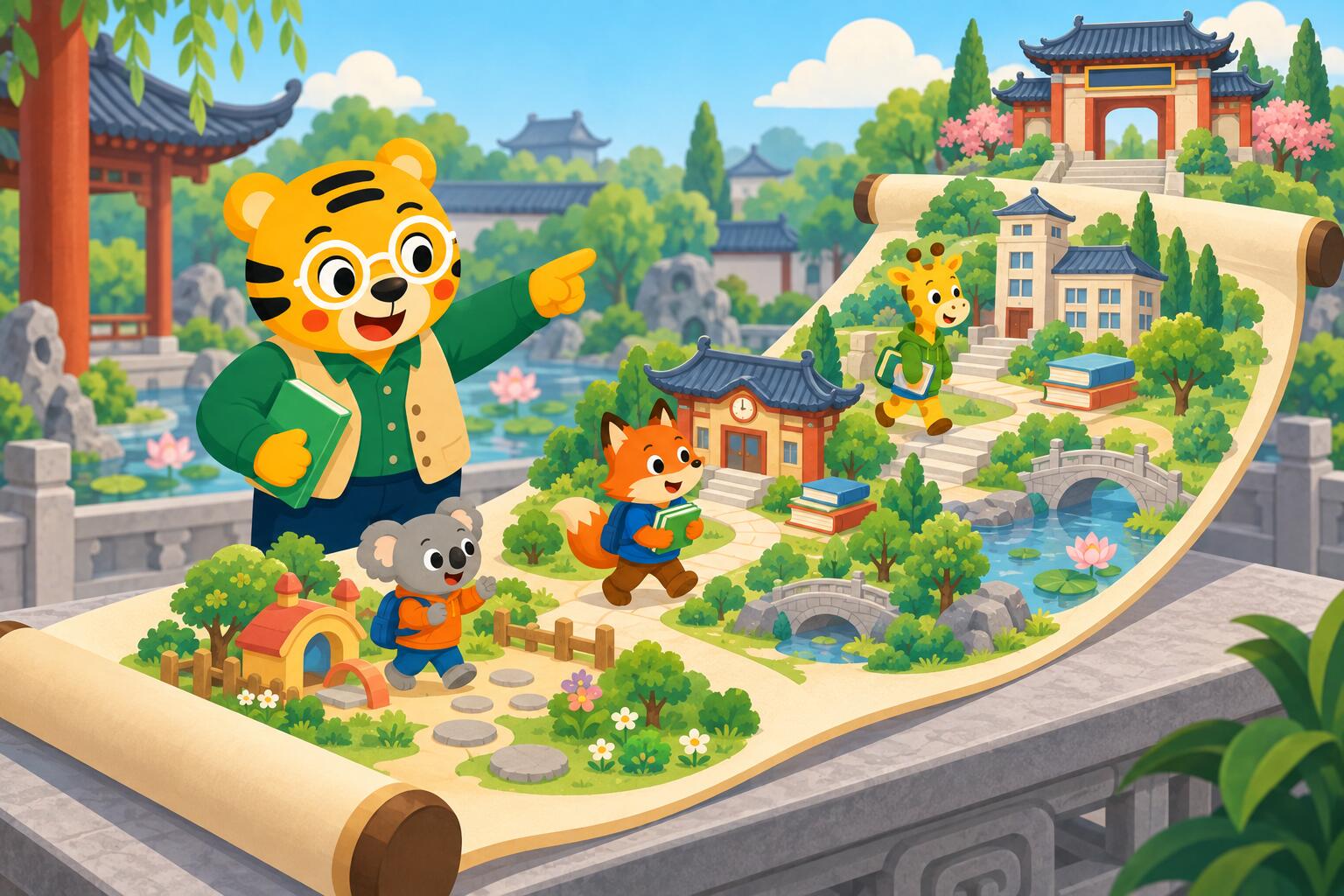
The Chinese education system is split into several stages by age and grade. Compulsory education in China usually lasts 9 years and includes primary education and lower secondary education.
Preschool education
Preschool education is not part of compulsory education, but many children attend 幼儿园 [yòu'éryuán] from 3 to 6 years old. 幼儿园 means "kindergarten".
At this stage, young children are often called 小朋友 [xiǎopéngyǒu], a very common Chinese term of endearment for little children.
Example:
| hanzi / pinyin / meaning |
|---|
| 我妹妹在幼儿园。 [wǒ mèimei zài yòu'éryuán] My little sister is in kindergarten. |
Primary education
Primary education in China usually lasts for 6 years, from around ages 6 to 12.
The word for primary or elementary school is 小学 [xiǎoxué], and elementary school students are called 小学生 [xiǎoxuéshēng].
The character 小 means "small" or "little", while 学 is related to "studying" or "learning". So 小学 literally means "small school" or "school for younger children".
Example:
| hanzi / pinyin / meaning |
|---|
| 我妹妹是小学生。 [wǒ mèimei shì xiǎoxuéshēng] My little sister is a primary school student. |
Secondary education
In Chinese, 中学 [zhōngxué] literally means "middle school" but unlike a US middle school, it refers to the school where students receive secondary education from ages 12 to 18.
This period is split across two main stages: 初中 [chūzhōng] and 高中 [gāozhōng].
初中 [chūzhōng]: lower secondary school
初中 [chūzhōng] is "lower secondary school". It usually lasts 3 years, from around ages 12 to 15, and is part of the compulsory education years.
| hanzi / pinyin / meaning |
|---|
| 我姐姐十四岁,她还是初中生。 [wǒ jiějie shísì suì, tā háishi chūzhōngshēng] My older sister is fourteen years old; she is still in lower secondary school. |
高中 [gāozhōng]: upper secondary school
高中 [gāozhōng] is "upper secondary school". It usually lasts another 3 years, from around ages 15 to 18, and is not part of compulsory education.
This stage is notoriously one of the most demanding parts of the education journey for Chinese students, as it's when many prepare for the 高考 [gāokǎo], the national university entrance exam.
Upper secondary school students are known as 高中生 [gāozhōngshēng].
Example:
| hanzi / pinyin / meaning |
|---|
| 我哥哥是高中生。 [wǒ gēge shì gāozhōngshēng] My older brother is an upper secondary school student. |
大学 [dàxué]: university
After the 高考 [gāokǎo], students who achieve the required results for their chosen subjects can head to university.
The word for university in Chinese is 大学 [dàxué]. Most undergraduate degrees usually last four years, although this can vary from course to course.
Example:
| hanzi / pinyin / meaning |
|---|
| 我姐姐在北京大学学习。 [wǒ jiějie zài Běijīng Dàxué xuéxí] My older sister studies at Peking University. |
Summary of the Chinese education system
| Approximate age | Level in English | Level in Chinese |
|---|---|---|
| 3-6 | Preschool | 幼儿园 [yòu'éryuán] |
| 6-12 | Primary/elementary school | 小学 [xiǎoxué] |
| 12-15 | Lower secondary school | 初中 [chūzhōng] |
| 15-18 | Upper secondary school | 高中 [gāozhōng] |
| 18+ | University | 大学 [dàxué] |
Key vocabulary about education
- 幼儿园 [yòu'éryuán]: kindergarten, nursery school or preschool
- 小朋友 [xiǎopéngyǒu]: young child
- 小学 [xiǎoxué]: primary/elementary school
- 小学生 [xiǎoxuéshēng]: primary/elementary school student
- 中学 [zhōngxué]: secondary school
- 中学生 [zhōngxuéshēng]: secondary school student
- 初中 [chūzhōng]: lower secondary school
- 高中 [gāozhōng]: upper secondary school
- 高中生 [gāozhōngshēng]: upper secondary school student
- 高考 [gāokǎo]: national university entrance exam
- 大学 [dàxué]: university
|
Free download
If you've made it this far, you're serious. Turn that momentum into real progress with Chinesimple and make every study session count.
Native audio
Games
Flashcards
Exams
Pronunciation


|
|