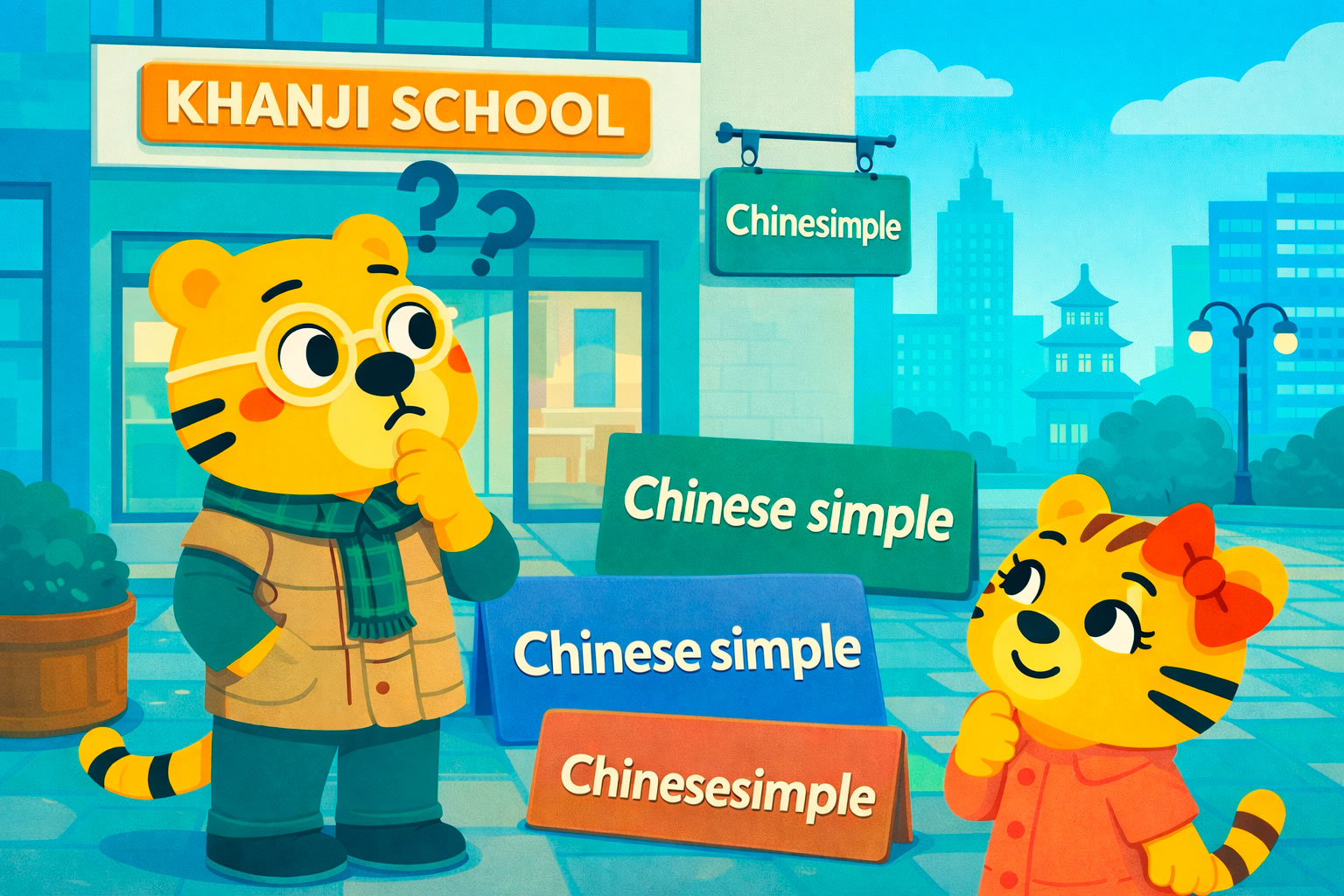
If you’ve wound up here on the hunt for Chinesimple, Chinese simple, or similar… don’t worry, you’re not alone. In fact, it’s such a common mix-up, you could almost consider it a rite of passage when learning Chinese 😉. That’s why, today, we’re going to share the story behind the name of our app.
It all started in 2012
When we first launched the app in 2012, its name was straightforward, short and to the point:
- HSK1
- HSK2
- HSK3… and so on.
No frills, no fancy branding. It was practical, but also a bit generic.
2015: we added “Chinese”
In 2015, we decided to make things a little clearer by adding the language to the name of the app. That’s how Chinese HSK1, Chinese HSK2, Chinese HSK3 and so on came about.
2019: Chinesimple was born
In 2019, we took the final leap and landed on our current name: Chinesimple –a combination of “Chinese” and “simple”. Because that has always been the ethos behind the app: to make Chinese more accessible, approachable, and less intimidating.
Since then, the full, official name has been “Chinesimple HSK.”
That said, many users still find their way to us by searching Simple Chinese, Chinese simple, or even ChineseSimple. We hemmed and hawed about changing the name again, but in the end decided to stick with Chinesimple – because it perfectly represents what we want to do.
2021: Khanji School came about
In 2021, Khanji School was born — our digital school and home to our entire educational project. The vision was clear: to create a space for several East Asian languages under one umbrella.
- Chinesimple → Chinese
- Japansimple → Japanese
- Koreansimple → Korean
And why “Khanji” and not “Kanji”?
Japanese characters are known as "kanji", Chinese are "hanzi" , and Korean are "hangul".
We wanted a name that could represent all three languages, so we chose “kanji” as a starting point, adding in the “h” from “hanzi” and “hangul” to get Khanji. This makes the name feel more familiar and inclusive.
In short, it doesn’t matter how you got here, be it searching "Simple Chinese," "Chinesesimple," or "Chinese simple"... What matters is what you do next! If that’s using our app to learn Chinese, then you’re on the right track.
So there you have it. Now, just like the stories behind the Chinese characters themselves, we hope our story will stick with you 🙂
|
Free download
If you've made it this far, you're serious. Turn that momentum into real progress with Chinesimple and make every study session count.
Native audio
Games
Flashcards
Exams
Pronunciation


|
|