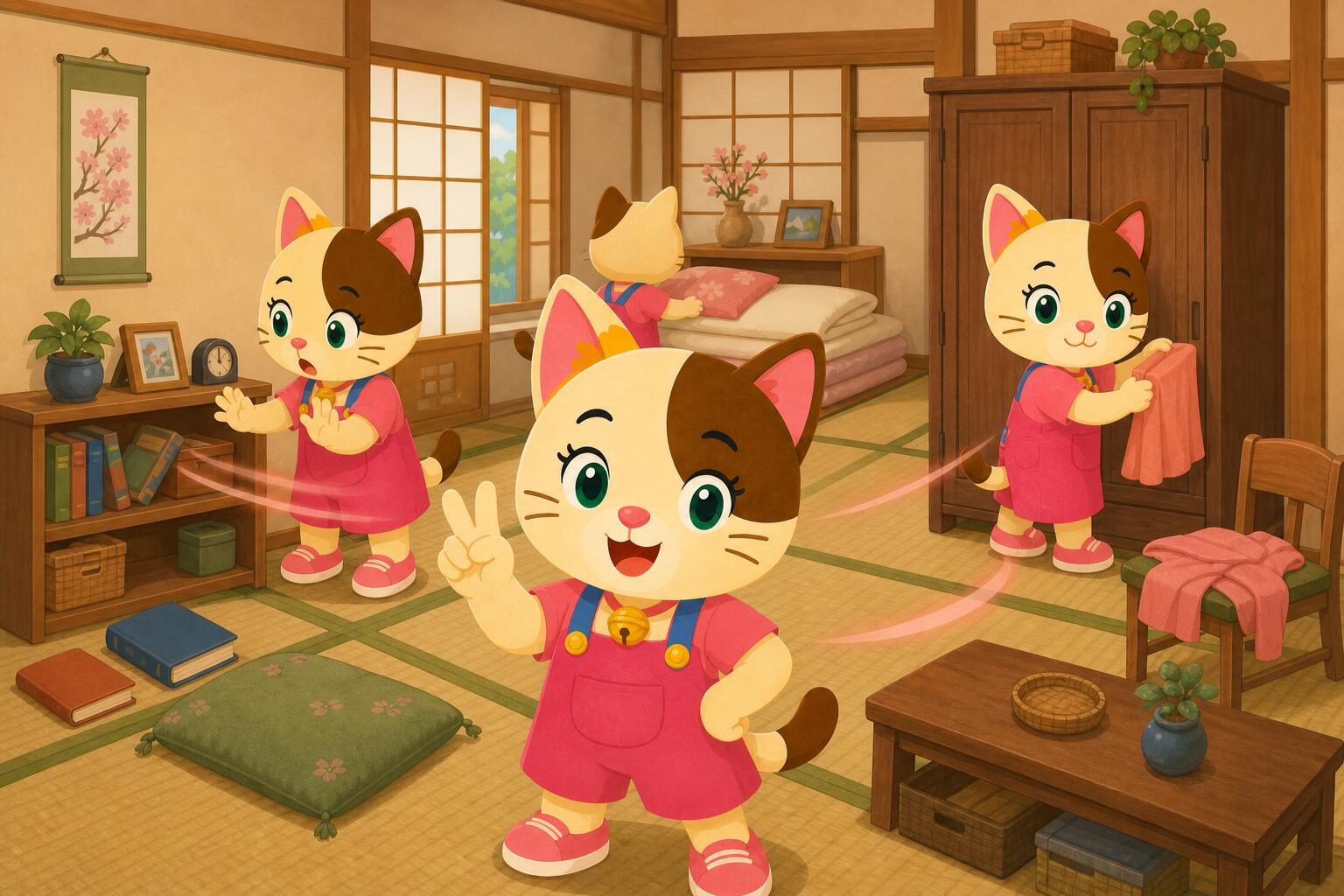
It all starts at school. In many Japanese elementary, junior high, and high schools, there are no custodians to clean the classrooms and common areas. Instead, it’s the students and teachers themselves who keep the school tidy.
Cleaning is not treated as a punishment, but as an everyday activity. And when you do something every day from an early age, it eventually becomes a habit and feels like a totally normal part of life.
How is cleaning organized in Japanese schools?
Every class is divided into small groups, with each responsible for cleaning a particular area of the school, such as bathrooms, classrooms, playgrounds, or science labs. Every day before home time, students and teachers spend some time cleaning up. It’s not a punishment for bad behaviour. Cleaning is simply a part of everyday school life.
This system teaches a simple lesson: when you’re the one cleaning up, you try not to make as much of a mess in the first place. Because we do this almost every day from the age of around six to seventeen, cleanliness and tidiness become second nature.
What do school meals have to do with it?
Another interesting part of the school day is lunchtime. In Japan, students usually eat together in their classroom with their teacher. In elementary school, the class is again divided into small groups of around five students who take turns serving lunch, with groups rotating each week.
These students go to collect their class’s lunch, known in Japanese as 給食【きゅうしょく・kyūshoku】. Then they put on white caps and smocks and serve the food to their classmates. Once they’re done eating, the same group returns the plates, utensils, pots, and empty milk bottles to the designated collection area.
From an early age, we learn about the organizing, serving and clearing up that goes into mealtimes — and how to leave things neat and tidy for others.
Why are these small habits important?
For me, the key thing to remember is that these are not extraordinary activities.
We are not simply told, “You have to be clean and tidy” and that’s that. We learn through small actions that we repeat every day: cleaning our classrooms, looking after common areas, serving lunch, and cleaning up afterwards. Cleanliness and tidiness are learned through actions, not just words. Personally, I have very fond memories of this system, especially lunches.
The same goes for Khanji School, where we don’t just learn Japanese grammar. We go deeper, learning about the habits, customs, and perspectives on life in Japan.
Frequently asked questions
Do Japanese students really clean their own schools?
Yes. In many Japanese schools, students help clean their classrooms and other school areas every day, usually alongside their teachers.
Is school cleaning used as a punishment?
No. It is generally part of the school routine and is not treated as a punishment.
What does 給食【きゅうしょく・kyūshoku】 mean?
給食【きゅうしょく・kyūshoku】 means “school lunch.” In Japan, the term is particularly used to refer to the school meal program provided to students.
Why do students serve their own food?
It’s a way for kids to be active participants in the day-to-day life of the school. Students learn how to organize themselves, work together, serve food, and clear up after eating.
Does this kind of cleaning alone explain why Japan is such a clean country?
No. Many other cultural and social factors have a role to play; daily cleaning at school is just one of them. But it does help children build habits associated with taking care of shared spaces from an early age.
|
Free download
If you've made it this far, you're serious. Turn that momentum into real progress with Chinesimple and make every study session count.
Native audio
Games
Flashcards
Exams
Pronunciation


|
|