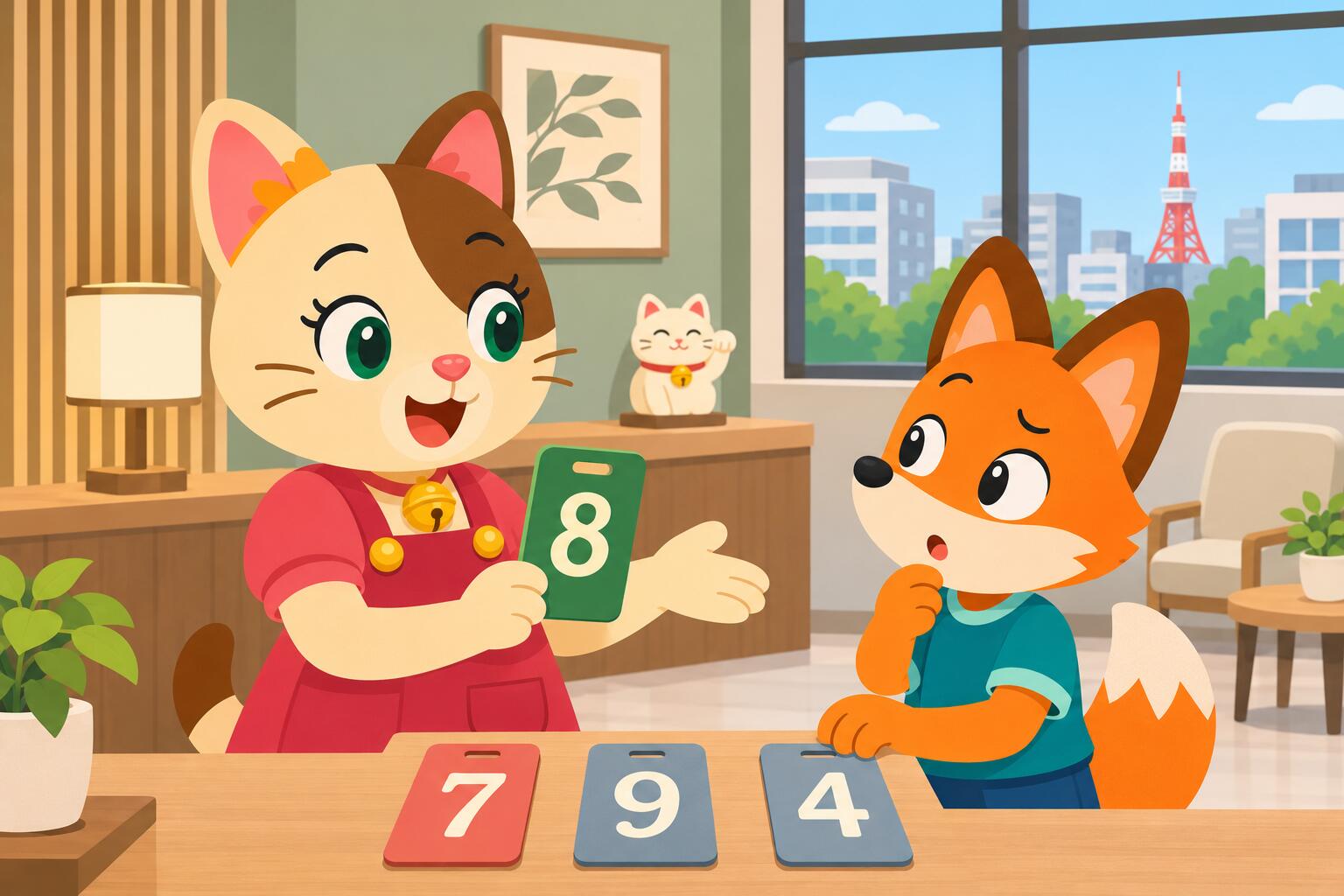
In Japan, 1, 3, 5, 7, and 8 can all have positive connotations, while 4 and 9 are often considered unlucky. Why? It's all to do with the pronunciation: certain readings of 4 and 9 sound exactly like the Japanese words for death and suffering.
Some numbers are said to bring good luck, prosperity, and success. But what does each number represent, and why do these connotations matter in Japan? Let's look at some examples from Japanese culture.
Which numbers are considered lucky in Japan?
Numbers like 1, 3, 5, 7, and 8 are associated with positive concepts such as new beginnings, growth, happiness, and prosperity. Here's what each one can represent and how it manifests itself in Japanese culture.
1. 一【いち, ichi】
The number 1 can symbolize a beginning or a starting point. It's associated with initiative, independence, and the energy to move forward.
3. 三【さん, san】
The number 3 is often seen as a positive number, associated with creativity and developing new ideas. It can also suggest more opportunities and the energy to take on new projects.
5. 五【ご, go】
The number 5 has a special place in traditional Japanese culture. One example is 五節句【ごせっく, gosekku】, Japan's five traditional seasonal festivals.
7. 七【なな, nana / しち, shichi】
Seven is known as a lucky number in many parts of the world, and it has a place in Japanese culture too. For example, the Seven Gods of Fortune, 七福神【しちふくじん, shichifukujin】, represent different kinds of prosperity, happiness, and good luck.
8. 八【はち, hachi】
Unlike its odd counterparts, the even number 8 is considered one of the luckiest in Japan. Why? Look at the shape of the kanji 八【はち, hachi】: its two strokes spread apart toward the bottom, like a gradually widening path. This shape symbolises growth, expansion, and prosperity. Hence why 8 is seen as an especially lucky number for attracting wealth, success, and good fortune.
Which numbers are considered unlucky in Japan?
Four and nine are traditionally avoided in some situations, mainly because of how they sound. When read aloud, both sound just like some rather more sinister words... You can see a similar link between numbers and sounds in Japanese number wordplay, known as 語呂合わせ【ごろあわせ, goroawase】.
4. 四【よん, yon / し, shi】
This is a big one that people often avoid in Japan. One way to read 4 is shi, which sounds just like 死【し, shi】, the Japanese word for "death." Some hospitals, hotels, and apartment buildings even skip it altogether when numbering rooms or floors. It's a superstition that can still shape parts of everyday life.
9. 九【きゅう, kyū / く, ku】
This is one of the few odd numbers to be seen as unlucky. That's because one way to read 9 is ku, which sounds just like 苦【く, ku】, meaning "suffering" or "pain." So, it may not be the best choice for a gift, celebration, or certain occasions involving someone's health. People may also avoid it when choosing room numbers or license plates.
Why do numbers matter in Japanese culture?
In Japan, numbers are for so much more than just counting. They carry cultural, symbolic, and linguistic associations that have been passed down for generations. To make sense of these superstitions, it helps to notice how the words for numbers sound and what other meanings those sounds might have.
That's why learning Japanese is about more than memorizing kanji, hiragana, and katakana. It's also about discovering the cultural references behind words and the way they sound.
At Khanji School, we like exploring the connection between the Japanese language and its culture. Understanding a word also means getting to know the history and customs behind it.
Frequently asked questions about lucky numbers in Japan
What's the luckiest number in Japan?
The number 8, written 八【はち, hachi】, is one of the luckiest numbers in Japan. Its kanji widens toward the bottom, a shape that symbolizes expansion and is associated with prosperity, wealth, and growth.
Why are 4 and 9 considered unlucky in Japan?
Some of their readings sound just like words with negative connotations. Four can be read as shi, which sounds just like 死【し, shi】, meaning "death." Nine can be read as ku, the same as 苦【く, ku】, meaning "suffering" or "pain."
Is 7 also a lucky number in Japan?
Yes. The number 7, written 七【なな, nana】, is considered lucky in Japan. A well-known example is the Seven Gods of Fortune, 七福神【しちふくじん, shichifukujin】, who represent happiness, prosperity, and good luck.
|
Free download
If you've made it this far, you're serious. Turn that momentum into real progress with Chinesimple and make every study session count.
Native audio
Games
Flashcards
Exams
Pronunciation


|
|