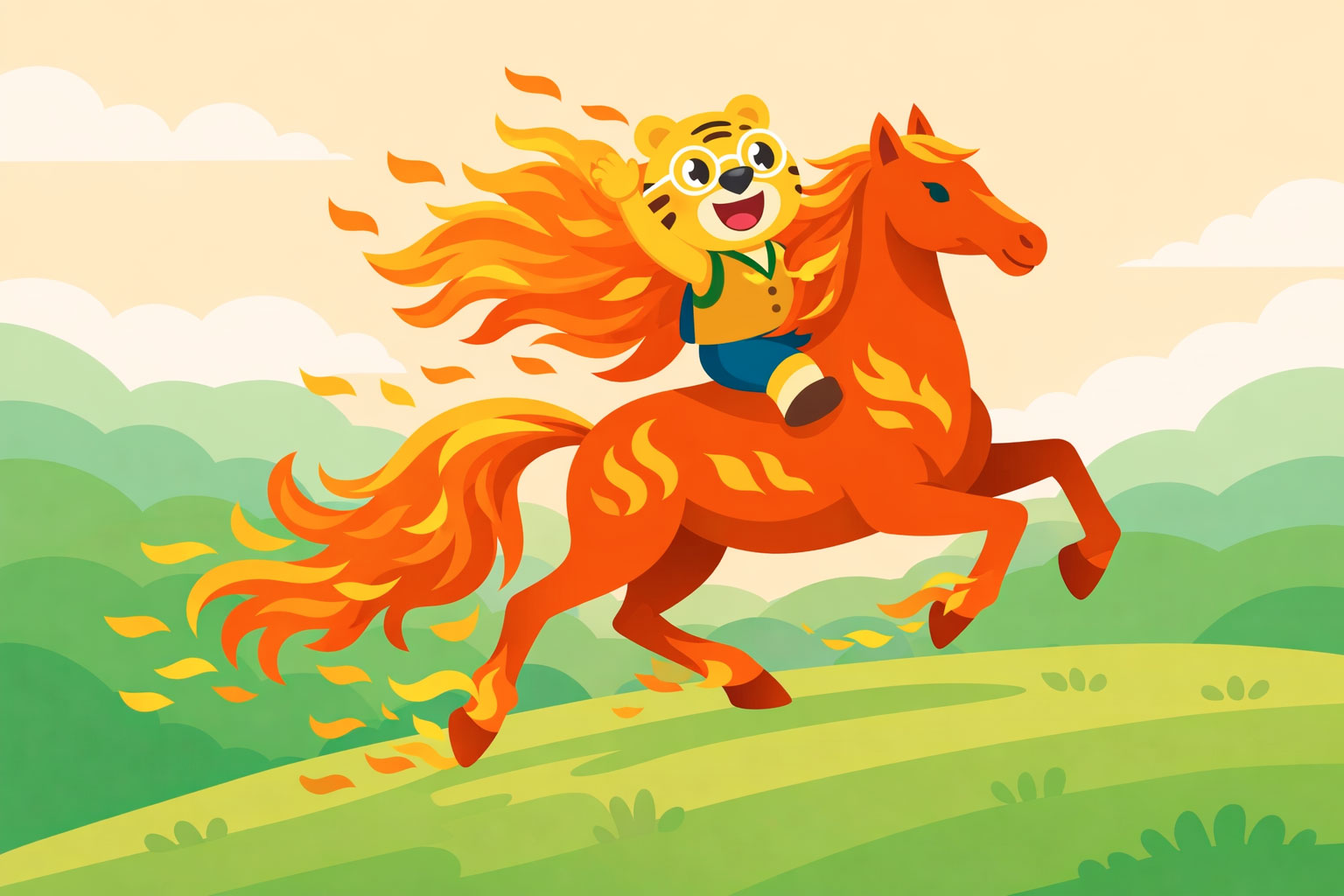
Did you know that in the traditional Chinese calendar, not only is each year represented by one of the zodiac animals, but also by one of the five elements?
2026 marks the beginning of the Year of the Fire Horse, starting on 17 February 2026, according to the lunar calendar.
This combination is particularly significant, as it blends the dynamic symbolism of the horse with the transformative nature of fire.
In today’s article, we dive into what makes this year so special, how it is traditionally interpreted in China and how millennials are reinterpreting it today. We’ll also learn some significant 成语 (Chinese idioms) to help understand the importance of the horse in Chinese culture.)
Traditional meaning of the horse
The horse, 马 [mǎ], occupies an important place in the Chinese cultural imagination. Historically, horses were associated with military power, movement, and social prestige, which explains their symbolic meanings of speed, ambition, freedom, and success.

|
These links are reflected in Chinese idioms. For instance:
- 一马当先 [yī mǎ dāng xiān], literally “a horse that gallop at the forefront”, meaning “to take the lead”.
- 马不停蹄 [mǎ bù tíng tí], literally “a horse that never stops galloping”, referring to the non-stop grind.
But 2026 isn’t just the Year of the Horse, 马年 mǎnián, it’s the year of the Fire Horse, 赤马年 [chìmǎnián]. 赤 is a more formal way of referring to the color red, hence the fire part.
The Fire Horse in the Sexagenary Cycle
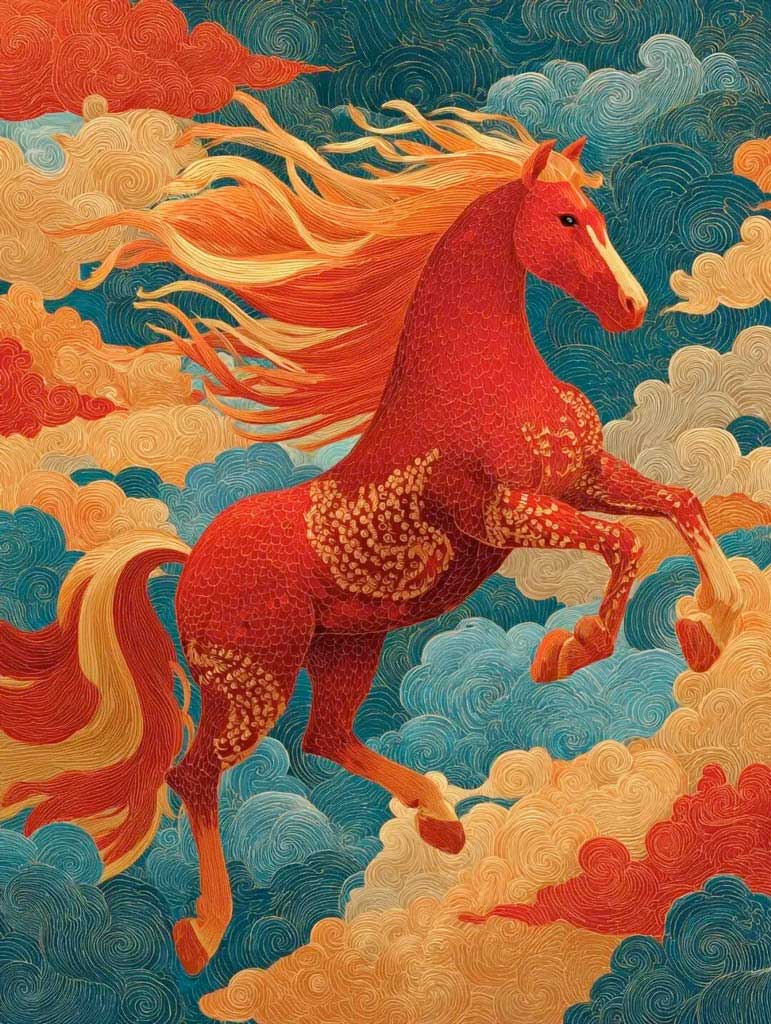
The Year of the Fire Horse is known as 丙午年 [bǐng wǔ nián] in the traditional sexagenary (60-year) cycle, which combines the Ten Heavenly Stems and the Twelve Earthly Branches.
In this system, 丙 [bǐng] corresponds to the element fire, and 午 [wǔ] to the horse.
|
Within the five elements (五行, wǔxíng), fire (火, huǒ) is associated with energy, passion, expansion, and transformation. When combined with the horse, you would traditionally expect a period of heightened dynamism, rapid change, and potential instability as a result.
What can we expect in 2026?
In popular astrology, Fire Horse years are often linked to social change, innovation, conflict, and disruption of the status quo.
Historically, they have had ambivalent connotations. While they may symbolize vitality and progress, they are also sometimes perceived as volatile or challenging.
This ambivalence reflects a broader trend in Chinese cosmology: the idea that balance between the elements is essential, and that excessive energy can lead to both opportunity and disruption.
|
As a result, traditional advice associated with Fire Horse years often focuses on moderation, self-control, taking care of your mental health, and nurturing personal relationships.
The millennial reinterpretation
In recent years, younger generations in China have reinterpreted traditional zodiac symbolism through the lens of modern life and digital culture.
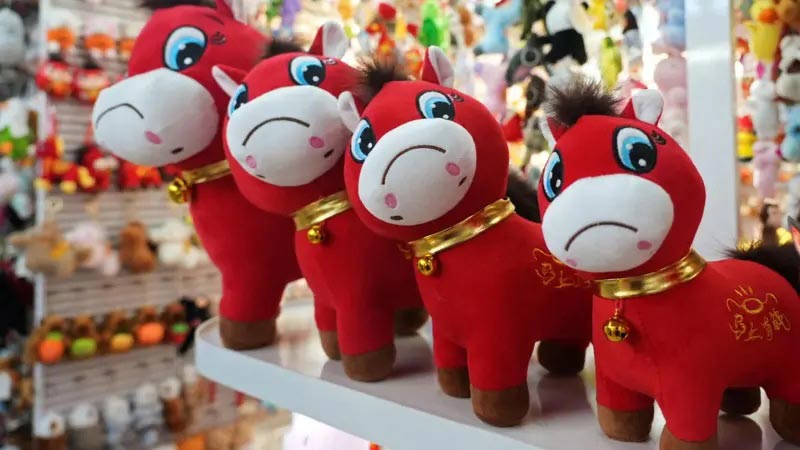
At the beginning of 2026, an image of a sad-looking horse toy was widely shared Chinese social media, becoming known as 哭哭马 [kūkū mǎ], “the crying horse”.
|
The most incredible thing is that thousands of young people went ahead and bought it anyway. Why? Because this sad horse resonated with many millennials and Gen Z, who associated it with feelings of exhaustion, work stress, and emotional fatigue. The phenomenon was further linked to the colloquial expression 牛马 [niúmǎ], a sarcastic term used to describe people who slave away “like oxen and horses”.
So, which horse would you be? Full of life? Or more 哭哭马, just trying to survive?
Either way, here’s a classic wish for the year:
马到成功 [mǎ dào chénggōng]
“May success arrive as quickly as the horse.”
Wishing you all the best for this Year of the Horse!
|
Free download
If you've made it this far, you're serious. Turn that momentum into real progress with Chinesimple and make every study session count.
Native audio
Games
Flashcards
Exams
Pronunciation


|
|