
If you’re starting the school year and learning Chinese, the new HSK 3.0 features several words and expressions to help you talk about your studies.
September is here. Summer is coming to an end, and the new school year is on the horizon: new classes, schedules, teachers...
At Chinesimple, we want to get you off to a good start by reviewing the most useful words from the new HSK 3.0 for talking about your school, classmates, exams and study routine.
Basic words for talking about school and university
- 学校 [xuéxiào]: school
- 大学 [dàxué]: university
- 学生 [xuésheng]: student
- 老师 [lǎoshī]: teacher
- 同学 [tóngxué]: classmate
- 教室 [jiàoshì]: classroom
| Hanzi / Pinyin / Meaning |
|---|
|
我在大学学习中文,我的老师和同学都很好。 wǒ zài dàxué xuéxí zhōngwén, wǒ de lǎoshī hé tóngxué dōu hěn hǎo I study Chinese at university, and my teacher and classmates are very nice. |
Vocabulary for talking about campus life
- 校园 [xiàoyuán]: campus
- 图书馆 [túshūguǎn]: library
- 留学生 [liúxuéshēng]: student studying abroad or international student
- 毕业 [bìyè]: to graduate or finish one’s studies
| Hanzi / Pinyin / Meaning |
|---|
|
很多留学生在校园里学习,也常去图书馆。 hěn duō liúxuéshēng zài xiàoyuán lǐ xuéxí, yě cháng qù túshūguǎn Many international students study on campus and also often go to the library. |
The school year and classes
Two very useful words for talking about your timetable are 上课 and 下课.
- 上课 [shàngkè]: to have class or go to class
- 下课 [xiàkè]: to finish class or leave class
You can also use:
- 课堂 [kètáng]: class or classroom, mainly in the context of learning, not so much a physical room
- 课程 [kèchéng]: course or subject
- 学期 [xuéqī]: semester or academic term
- 学年 [xuénián]: academic year
| Hanzi / Pinyin / Meaning |
|---|
|
这个学期我的课程很多,每天都要上课。 zhège xuéqī wǒ de kèchéng hěn duō, měitiān dōu yào shàngkè This semester I have signed up for lots of courses, and have to go to class every day. |
Words for talking about homework and exams
- 考试 [kǎoshì]: exam
- 作业 [zuòyè]: homework
- 作文 [zuòwén]: essay
- 课文 [kèwén]: lesson text
| Hanzi / Pinyin / Meaning |
|---|
|
今天的作业是读课文和写作文。 Jīntiān de zuòyè shì dú kèwén hé xiě zuòwén Today's homework is to read the lesson text and write an essay. |
Four skills for learning a language
When you study Chinese, you also need to be able to talk about the skills you are honing.
- 听力 [tīnglì]: listening
- 口语 [kǒuyǔ]: speaking
- 阅读 [yuèdú]: reading
- 写作 [xiězuò]: writing
These four terms are especially useful when you’re preparing for the HSK, because they are the main sections that make up the exam.
| Hanzi / Pinyin / Meaning |
|---|
|
我想多练习听力和口语。 wǒ xiǎng duō liànxí tīnglì hé kǒuyǔ I want to practise listening and speaking more. |
Study materials
To talk about what you take to class or what you use to study, you can learn these words:
- 课本 [kèběn]: textbook
- 本子 [běnzi]: notebook
- 书包 [shūbāo]: school bag or backpack
- 词典 [cídiǎn]: dictionary
| Hanzi / Pinyin / Meaning |
|---|
|
我的书包里有课本、本子和词典。 wǒ de shūbāo lǐ yǒu kèběn, běnzi hé cídiǎn There is a textbook, a notebook and a dictionary in my backpack. |
School subjects and fields of study
HSK 3.0 also includes words for talking about school subjects and fields of study. Such as:
- 数学 [shùxué]: math
- 历史 [lìshǐ]: history
- 体育 [tǐyù]: physical education
- 科学 [kēxué]: science
- 教育 [jiàoyù]: education
| Hanzi / Pinyin / Meaning |
|---|
|
我喜欢历史,也对科学很感兴趣。 wǒ xǐhuan lìshǐ, yě duì kēxué hěn gǎn xìngqù I like history, and I am also interested in science. |
University and academic vocabulary
If you study at university or want to talk about higher education, these terms are especially useful:
- 专业 [zhuānyè]: university degree or major
- 硕士 [shuòshì]: master’s degree
- 博士 [bóshì]: doctorate
- 学费 [xuéfèi]: tuition fees
- 奖学金 [jiǎngxuéjīn]: scholarship
| Hanzi / Pinyin / Meaning |
|---|
|
我的专业是教育,我想申请奖学金。 wǒ de zhuānyè shì jiàoyù, wǒ xiǎng shēnqǐng jiǎngxuéjīn My degree is in Education, and I want to apply for a scholarship. |
FAQs
Are all of these words in HSK 3.0?
Yes. We have selected the most useful study-related vocabulary from the official lists for the new HSK. Specifically, most of these terms can be found in levels 1 to 4.
What is the difference between 课, 课堂 and 教室?
课 [kè] means "class" or "lesson", and usually refers to the content or the class as a unit.
| Hanzi / Pinyin / Meaning |
|---|
|
今天有汉语课。 jīntiān yǒu hànyǔ kè Today I have Chinese class. |
课堂 [kètáng] refers to the context of the class, i.e. the learning environment or situation.
| Hanzi / Pinyin / Meaning |
|---|
|
在课堂上。 zài kètáng shang In class. |
教室 [jiàoshì] means "classroom", the physical place where the class is taught.
| Hanzi / Pinyin / Meaning |
|---|
|
老师在教室里。 lǎoshī zài jiàoshì lǐ The teacher is in the classroom. |
What other subjects are included in the HSK 3.0 vocabulary lists?
物理 [wùlǐ]: physics, 化学 [huàxué]: chemistry, 地理 [dìlǐ]: geography, 政治 [zhèngzhì]: politics, 美术 [měishù]: fine arts, 哲学 [zhéxué]: philosophy and 文学 [wénxué]: literature.
What is the difference between 老师 and 教师?
老师 [lǎoshī] means "teacher" and is the word you will hear most often in everyday use. You can use it to talk about your teacher or to address someone who teaches.
| Hanzi / Pinyin / Meaning |
|---|
|
王老师 wáng lǎoshī teacher Wang |
教师 [jiàoshī] also means "teacher" or "educator", but it has a more formal tone and often appears in institutional, professional or administrative contexts, as in 教师培训 [jiàoshī péixùn], "teacher training".
|
Free download
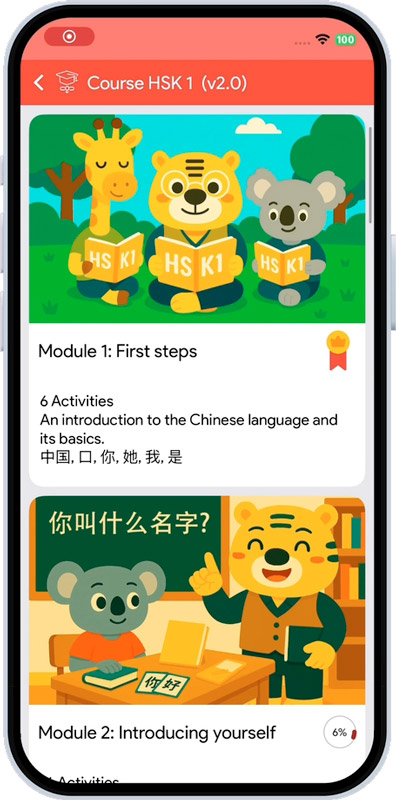
If you've made it this far, you're serious. Turn that momentum into real progress with Chinesimple and make every study session count.
Native audio
Games
Flashcards
Exams
Pronunciation


|
|