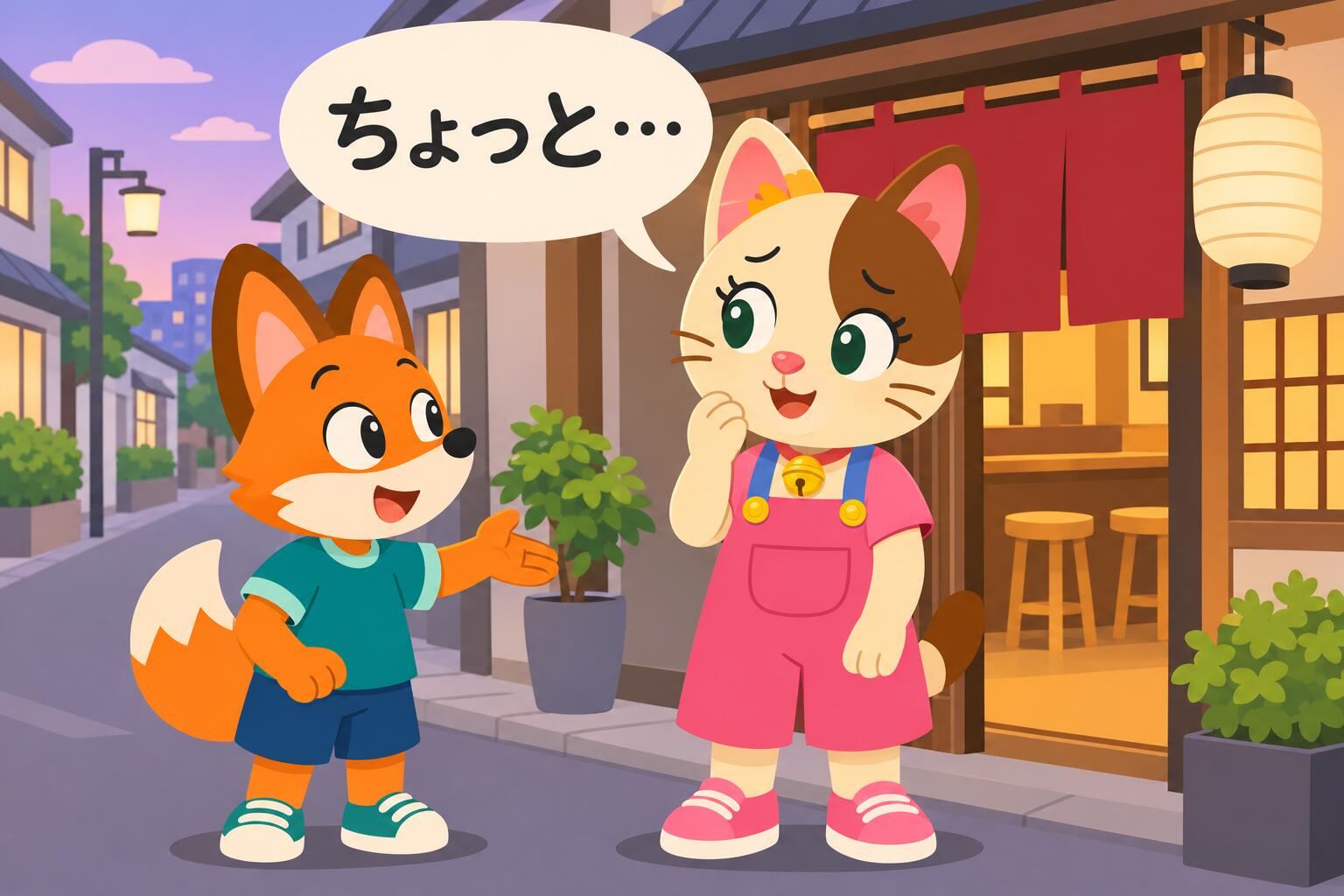
You can often say "no" in Japanese without actually saying いいえ【iie】, the actual word for "no." One common way is by saying ちょっと【chotto】. It literally means "a little," but in certain contexts, it can be a gentle way to turn down an invitation or a request.
In Japan, we don't usually like to turn people down outright, so we often take a more indirect approach (遠回し【とおまわし, tōmawashi】). We're pretty good at saying "no" without actually saying it.
In some situations, ちょっと【chotto】 can be a softer way to say:
- I can't
- That doesn't work for me
- That's a little tricky for me
- I'd rather not
The nice thing about ちょっと【chotto】 is that you don't have to spell out the fact that you're turning someone down. People can usually tell what you mean from the context. Let's look at a few everyday examples!
How to turn down an invitation or a request using ちょっと【chotto】
When someone asks to sit down
| Japanese / romaji / meaning |
|---|
| A: ここに座ってもいいですか。 【Koko ni suwatte mo ii desu ka?】 Can I sit here? |
| B: すみません。ちょっと… 【Sumimasen. Chotto…】 Sorry, it's just that… (That doesn't really work for me.) |
When someone invites you to dinner
| Japanese / romaji / meaning |
|---|
| A: 明日一緒に晩ご飯を食べに行きませんか。 【Ashita issho ni bangohan o tabe ni ikimasen ka?】 Would you like to go out for dinner tomorrow? |
| B: すみません。明日はちょっと… 【Sumimasen. Ashita wa chotto…】 Sorry, tomorrow doesn't really work for me… |
When someone asks you for a favor
| Japanese / romaji / meaning |
|---|
| A: 息子に英語を教えてくださいませんか。 【Musuko ni eigo o oshiete kudasaimasen ka?】 Could you teach my son English? |
| B: すみません。英語はちょっと… 【Sumimasen. Eigo wa chotto…】 Sorry, it's just that teaching him English… |
So the next time an invitation or a request doesn't really work for you, you can turn it down gently and indirectly by saying:
| Japanese / romaji / meaning |
|---|
| すみません。ちょっと… 【Sumimasen. Chotto…】 Sorry, it's just that… / That doesn't work for me… / I can't… |
A very Japanese way to say "no" without saying "no"!
At Khanji School, we learn Japanese as it's actually spoken in everyday life. Part of learning a language is also understanding what people mean, even when they don't say it outright.
Frequently asked questions about saying "no" in Japanese
How do you say "no" in Japanese?
The direct way to say "no" is いいえ【iie】. But in everyday conversations people tend to use indirect wording (遠回し【とおまわし, tōmawashi】) to turn down an invitation or a request.
What does ちょっと【chotto】 mean in Japanese?
ちょっと【chotto】 literally means "a little." Depending on the context, it can also signal that something is difficult, that it doesn't work for you, or that you'd rather turn down an offer.
Is it rude to say いいえ【iie】 in Japanese?
No. いいえ【iie】 is a perfectly correct way to say "no," and it isn't rude in itself. It's just that in some social situations, it can feel more considerate to let someone down gently.
|
Free download
If you've made it this far, you're serious. Turn that momentum into real progress with Chinesimple and make every study session count.
Native audio
Games
Flashcards
Exams
Pronunciation


|
|