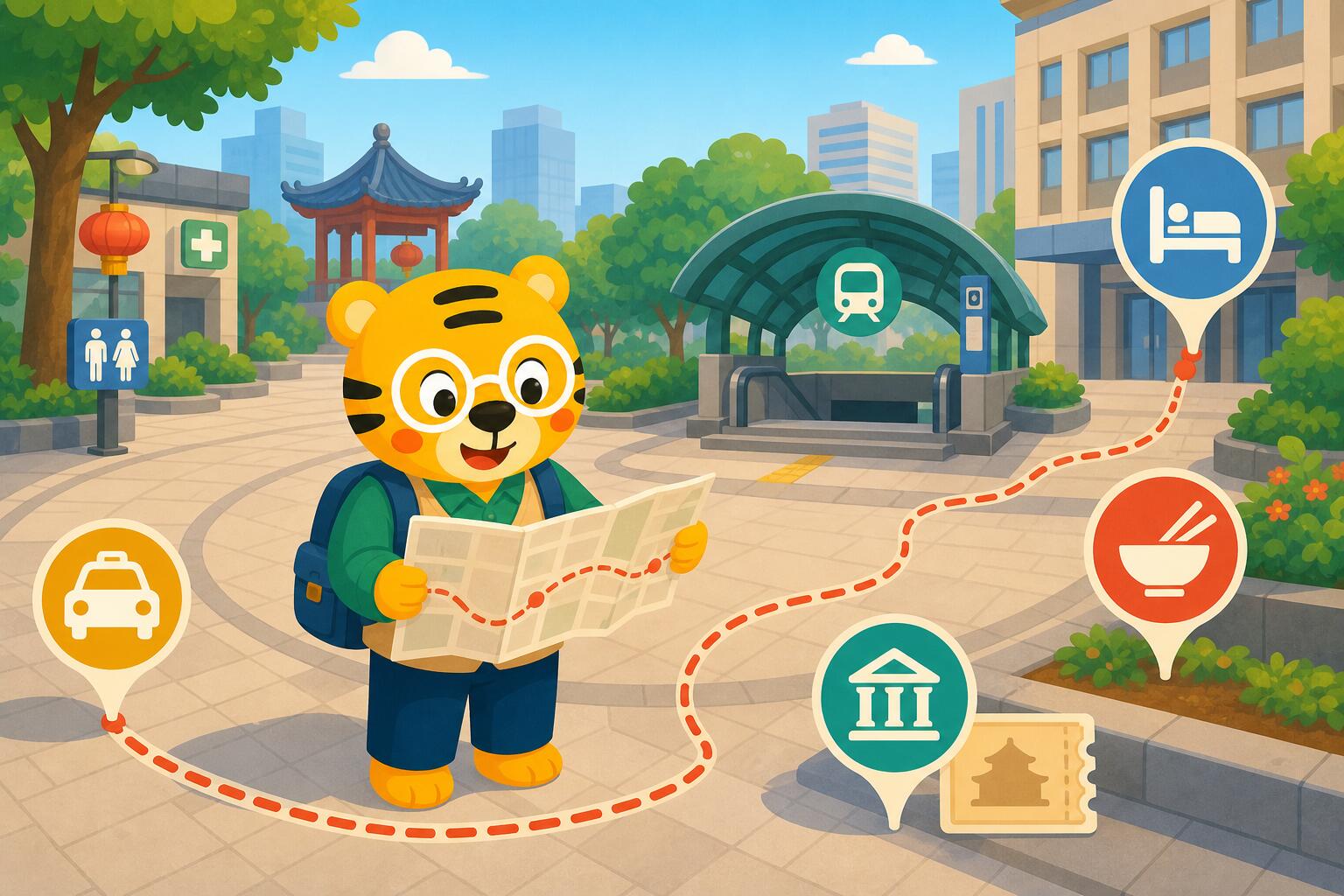
The HSK2 3.0 2026 includes many terms and expressions that are particularly useful for traveling in China, from transportation, hotels, and restaurants to shopping, and directions.
HSK2 3.0 is the second level of the new official Chinese exam, and it will prepare you to better navigate simple conversations in China. In this article, we’ll take a closer look at 10 words from HSK2 3.0 that you will definitely use on your next trip to China.
1. 不好意思 [bùhǎoyìsi]
不好意思 means "sorry," "excuse me." This is a very useful expression to get someone's attention or to apologise.
| Hanzi / Pinyin / Meaning |
|---|
|
不好意思,我听不懂,可以说慢一点儿吗? [bùhǎoyìsi, wǒ tīng bù dǒng, kěyǐ shuō màn yìdiǎnr ma?] Sorry, I don’t understand. Could you please speak a bit more slowly? |
2. 洗手间 [xǐshǒujiān]
洗手间 means "bathroom" or "restroom." It's one of those words that it's best to learn early on, especially because many restaurants in China don't have restrooms… So, at some point, you'll need to find public bathrooms.
| Hanzi / Pinyin / Meaning |
|---|
|
请问,洗手间在哪儿? [qǐngwèn, xǐshǒujiān zài nǎr?] Excuse me, where’s the bathroom? |
3. 打车 [dǎchē]
打车 means "to call a taxi" or "to take a taxi." Chinese cities are huge and taxis are quite affordable, so they’re a great way to get around quickly.
| Hanzi / Pinyin / Meaning |
|---|
|
你可以用滴滴打车 [nǐ kěyǐ yòng dīdī dǎchē] You could call a taxi using the 滴滴 app. |
4. 地铁 [dìtiě]
地铁 means "metro." China has an excellent metro system. It’s modern, comfortable, and affordable, with many lines that run a frequent service. You will almost certainly use the metro on your trip to China.
| Hanzi / Pinyin / Meaning |
|---|
|
你们坐六号线可以去市中心 [nǐmen zuò liù hào xiàn kěyǐ qù shì zhōngxīn] You can take the metro line 6 to the city center. |
5. 机场 [jīchǎng]
机场 means "airport." It will most likely be one of the first words you see when you land in China.
| Hanzi / Pinyin / Meaning |
|---|
|
从这儿到北京机场要五十分钟 [cóng zhèr dào běijīng jīchǎng yào wǔshí fēnzhōng] It takes fifty minutes from here to the airport. |
6. 酒店 [jiǔdiàn]
酒店 means "hotel." This one is especially handy when making a reservation, asking for directions, or explaining where you are staying. Another way to say "hotel" in Chinese is 宾馆 [bīnguǎn].
| Hanzi / Pinyin / Meaning |
|---|
|
我的酒店在南京路78号 [wǒ de jiǔdiàn zài nánjīng lù qīshíbā hào] My hotel is on Nanjing Road, number 78. |
7. 饭馆 [fànguǎn]
饭馆 means "restaurant." You may come across synonyms such as 饭店 [fàndiàn] or 餐馆 [cānguǎn].
| Hanzi / Pinyin / Meaning |
|---|
|
这家饭馆不错。 [zhè jiā fànguǎn búcuò.] This restaurant is pretty good. |
8. 门票 [ménpiào]
门票 means "entry" or "ticket." You’ll use it in museums, parks, temples, tourist attractions, or places like the Great Wall.
| Hanzi / Pinyin / Meaning |
|---|
|
门票多少钱? [ménpiào duōshao qián?] How much is this ticket? |
9. 药店 [yàodiàn]
药店 means "pharmacy." We hope you don't have to use this one on your trip to China, but just in case you need to buy medicine, get some painkillers, or tackle a small emergency, you will need to look out for a sign with these characters.
| Hanzi / Pinyin / Meaning |
|---|
|
附近有药店吗? [fùjìn yǒu yàodiàn ma?] Is there a pharmacy nearby? |
10. 车站 [chēzhàn]
车站 can refer to any kind of station or stop for transportation, usually on land. If you want to specify what kind, just use the term for the mode of transportation + (车)站. For example:
- 火车站 [huǒchēzhàn]: train station
- 汽车站 [qìchēzhàn]: bus station
- 公交车站 [gōngjiāochēzhàn]: bus stop
- 地铁站 [dìtiězhàn]: metro station
HSK2 3.0 is also useful for real life
As you can see, studying HSK2 is not just about memorizing words for an exam. Many words at this level can be found in typical situations, such as asking for help, using public transport, going to a museum, looking for a bathroom, or explaining where your hotel is.
That's why, at Chinesimple by Khanji School, we focus on learning HSK vocabulary through examples, context, and real-life situations. So, you can prepare for the exam while also learning words that can help you communicate outside the classroom.
Frequently asked questions
Will I find these words in HSK2 3.0?
Yes. All of the words we have selected here form part of the new HSK2 3.0 vocabulary for 2026.
Are these words useful if I'm going to travel to China?
Yes. They are especially useful for transportation, hotels, restaurants, directions, and everyday situations.
Do I have to learn them before taking the HSK2?
We do advise you learn them because they form part of this level. But, more than that, they are easy to practice in real life.
Apart from these, are there any other HSK2 3.0 words related to travel?
Yes, for example: 机票 [jīpiào]: plane ticket; 往 [wǎng]: towards; 旅游 [lǚyóu]: to travel, to tour; 门口 [ménkǒu]: entrance, door.
|
Free download
If you've made it this far, you're serious. Turn that momentum into real progress with Chinesimple and make every study session count.
Native audio
Games
Flashcards
Exams
Pronunciation


|
|